01
List commercial equipment
Describe the trailer class, configuration, condition, location, availability, documentation, and owner terms.
List commercial freight equipment, set your own terms, and let HaulLynx surface it to carriers whose freight and operating profile fit—with compatibility, verification, payment, and paperwork connected.
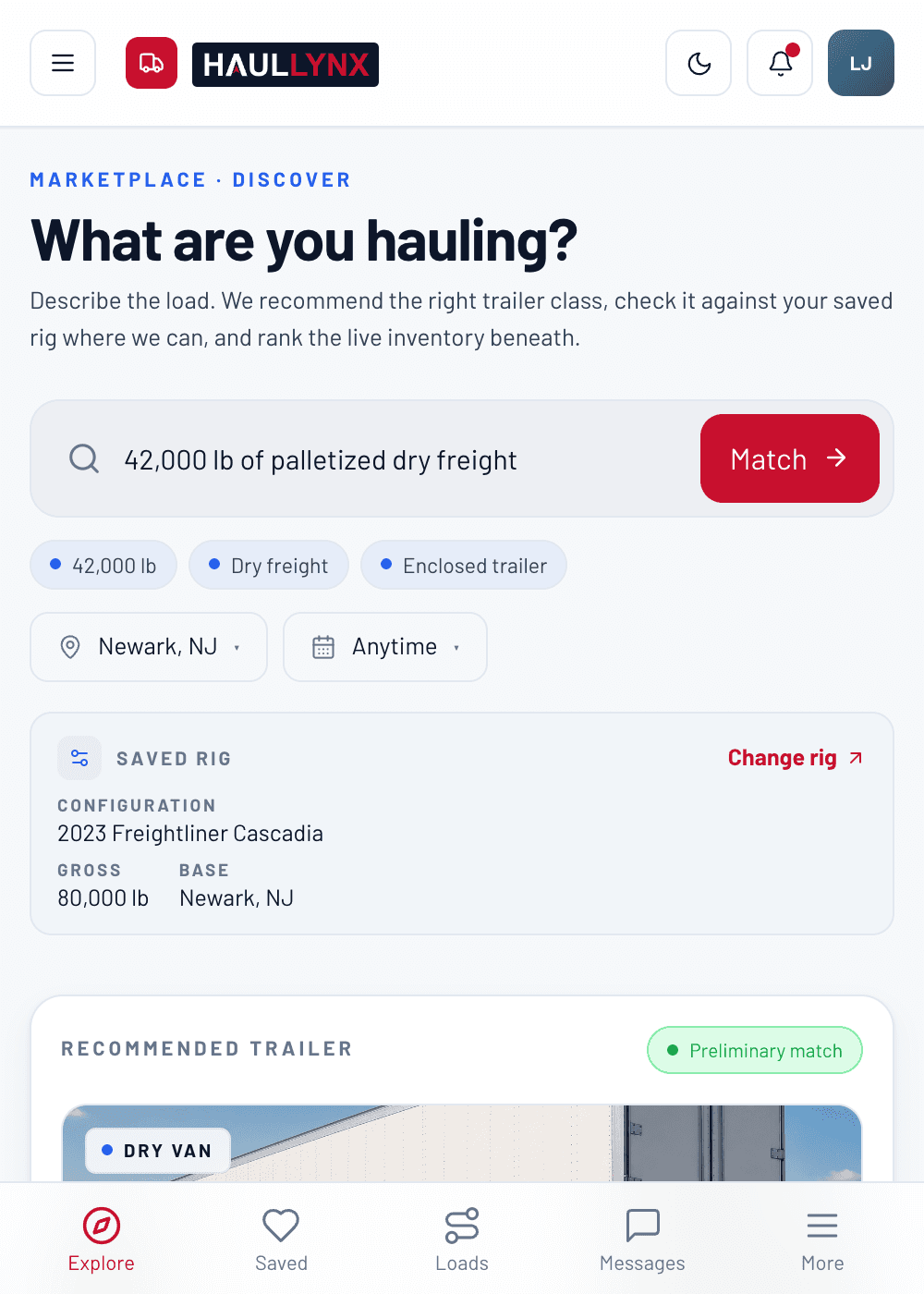
The equipment must fit the freight, location, dates, tractor, operating authority, insurance posture, and commercial terms. HaulLynx keeps that context inside the match.
Describe the trailer class, configuration, condition, location, availability, documentation, and owner terms.
The owner controls the commercial offer. Platform fees and other price components are shown before commitment.
The match evaluates the freight and equipment attributes available in the record rather than asserting that any trailer will do.
Owner and renter disclosures remain visible before booking so material conditions are not buried.
The booking records owner approval, payment authorization, and lifecycle state instead of treating checkout as the entire transaction.
Inspection and damage-response records attach to the booking when they exist, and missing evidence remains honestly missing.
HaulLynx compares the available load and equipment facts and shows why a match fits, where evidence is absent, and what still needs human confirmation.
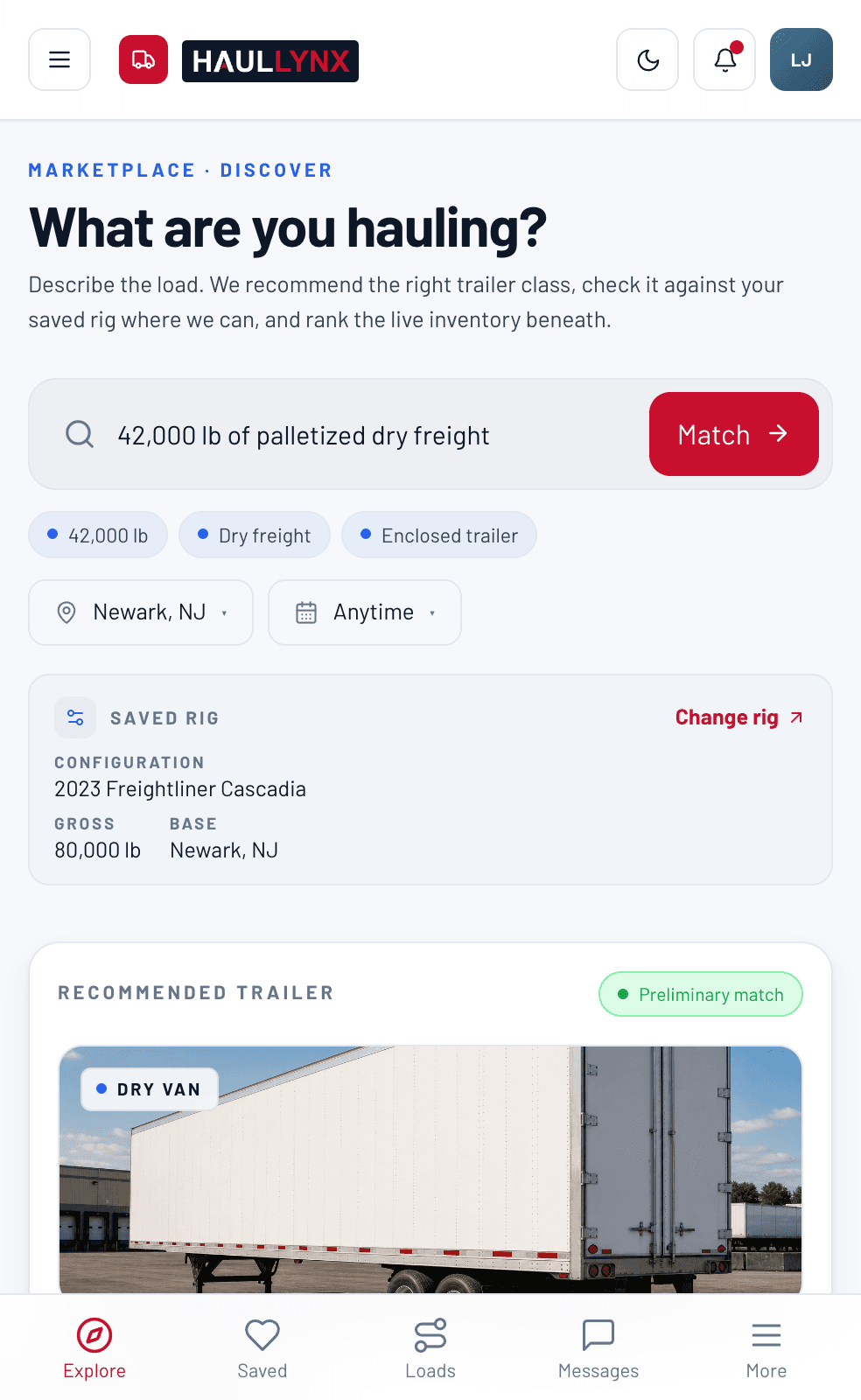
Create the equipment record, availability, rate, and operating disclosures.
Carriers discover equipment against their freight and review the compatibility evidence.
The owner approves the renter and both sides confirm the material terms.
Payment, pickup, return, inspection, and any damage evidence stay tied to the booking.
A compatibility score is limited to the data actually available. Missing inspections, documentation, or lifecycle evidence are identified as missing rather than inferred.
Put commercial freight capacity in front of the network without turning the owner into a passive inventory supplier.